The Visible World Is Not the Whole World
On the body as a map of what we cannot see
- chakras
- Kabbalah/sefirot
- Hebrew Bible (ruaḥ/or)
The visible world is not the whole of reality, but the maps traditions draw through the body—Kabbalistic sefirot, Tantric centers, and the Hebrew Bible’s breath and light—are not the same hidden anatomy. Calling them energy centers or electromagnetic fields makes the unfamiliar sound familiar while flattening what each text actually asks a reader to notice and practice.
Seed
Show full seedHide full seedLet's seed a new "The Shelf" essay. Let's come up with an idea. How about: a piece in regard to researching esoteric "wisdom" from Eastern thought as it regards the Chakra system - the aura, etc. We can bring in some esoteric understanding of anything that might be "hidden," within the Western Bible - perhaps the Old Testament. Let's also continue to explore the concept that everything is "Energy," and that we experience our reality as being 3d objects within the electromagnetic spectrum: and as far as our immediate senses can grasp - we can only point at elements within the "visual" portion of the electromagnetic spectrum. Before we generate anything - let's flesh this out a bit to develop a strong thesis that we can unravel.
Seed
Show full seedHide full seedThe Visible World Is Not the Whole World
SeedPrompts used to generate this essay.
User
Let's seed a new "The Shelf" essay. Let's come up with an idea. How about: a piece in regard to researching esoteric "wisdom" from Eastern thought as it regards the Chakra system - the aura, etc. We can bring in some esoteric understanding of anything that might be "hidden," within the Western Bible - perhaps the Old Testament. Let's also continue to explore the concept that everything is "Energy," and that we experience our reality as being 3d objects within the electromagnetic spectrum: and as far as our immediate senses can grasp - we can only point at elements within the "visual" portion of the electromagnetic spectrum. Before we generate anything - let's flesh this out a bit to develop a strong thesis that we can unravel.
User
What is important, as we develop a nice to read thesis, is to, as you have begun to do, give the reader actual spiritual texts/terminology, this is important for this read.
User
This is great - let's go ahead and move forward with a working thesis, and work toward making a ~15 or so minute read for break time.
User
Since this is an actual thing I want to read as if it wasn't a "draft," perhaps we should make sure that it reads as if were a finished version of a "draft." The goal for these is usually to occupy my time during my break. Does this read like that currently?
Intended lens: chakras, Kabbalah/sefirot, Hebrew Bible (ruaḥ/or), energy vs electromagnetic spectrum, comparative spiritual maps
Created by: The Shelf editorial team
On the body as a map of what we cannot see
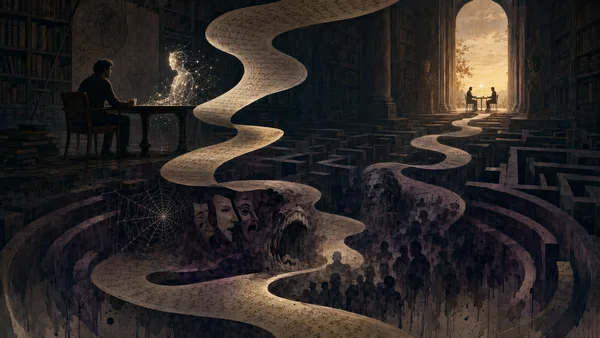
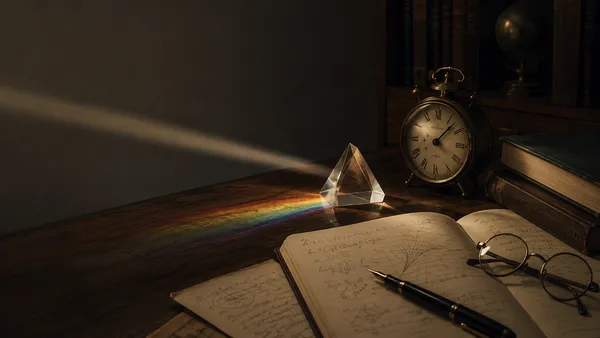
We tend to treat seeing as the same thing as knowing. The table is there because we see it; the room ends where our eyes stop finding its walls. Yet our sight is only one narrow opening onto the physical world. Human eyes register a small band of electromagnetic radiation—the band we call visible light. Radio waves, infrared, ultraviolet, X-rays, and gamma rays do not become unreal because we cannot see them unaided. Instruments let us detect some of what our senses miss.
That scientific fact can stir the imagination. Perhaps the visible world is only the surface of a deeper one. Perhaps the body itself has hidden structures, currents, centers, or fields. Many spiritual traditions have made such claims in their own vocabularies. The temptation is to translate them immediately into modern language: chakras are energy centers; the aura is an electromagnetic field; the Kabbalistic sefirot are Jewish chakras. Each phrase makes the unfamiliar sound familiar. Each may also flatten the thing it is trying to explain.
The more honest beginning is to listen to the traditions’ own words. What does a text mean by a “center,” a “breath,” a “light,” or a “foundation”? What does it ask a reader or practitioner to do with that idea? And when we compare two maps of the unseen, are we discovering the same hidden territory—or learning how different cultures have made the unseen thinkable?
Ten sefirot: a pattern of divine relation
One early Jewish text of esoteric speculation, Sefer Yetzirah—“Book of Formation”—opens a compact and enigmatic world of number, language, and creation. Its first chapter speaks of ten sefirot belimah. The phrase is famously difficult to render: translations offer possibilities such as “ineffable,” “without substance,” or “boundless” sefirot. The text tells its reader to contemplate ten and not nine, ten and not eleven. It pairs them with the twenty-two Hebrew letters as foundations of creation. Already, this is unlike the familiar picture of colored spheres arranged up the human spine: the sefirot here belong to a cosmological and linguistic account of how the world is formed.
Later Kabbalah gives the ten sefirot their familiar names: Keter (Crown), Chokhmah (Wisdom), Binah (Understanding), Chesed (Loving-kindness), Gevurah (Strength or restraint), Tiferet (Beauty or harmony), Netzach (Endurance or victory), Hod (Splendor), Yesod (Foundation), and Malkhut (Kingdom). They are often pictured in the Tree of Life, a diagram that makes relations visible: right and left, giving and restraint, balance, transmission, and the arrival of divine presence in the world.
The names are not simply ten personality traits, nor ten organs, nor ten independent gods. In Kabbalistic thought, they are ways of speaking about divine manifestation—how the unknowable source relates to a world that can be experienced. The Zoharic tradition is careful, in its own way, to preserve divine unity while describing differentiated qualities or emanations. Later interpreters elaborate the structure in different ways; there is no single chart that captures every Kabbalistic account.
A vivid body map appears in Pataḥ Eliyahu, a passage in Tiqqunei Zohar, a work associated with the Zoharic corpus. It describes the sefirot through the metaphor of a body: Chesed, loving-kindness, as the right arm; Gevurah, restraint or severity, as the left arm; Tiferet, harmony, as the torso; Netzach and Hod as the legs; and Yesod, foundation, as the covenantal point. In this imagery, the body gives the reader a way to contemplate relation and function. The right and left arms are not merely places where a person stores kindness and discipline. They picture the complementary forces through which divine life is imagined to act.
This bodily correspondence may be what people have in mind when they speak of a Jewish “larger chakra system.” The comparison has a foothold, but the distinction matters: the sefirot map divine relation, and the human form mirrors that pattern. They are not traditionally described as ten centers running up the spine.
Six centers and a thousand-petaled lotus
A different kind of map appears in Tantric yoga. The Sanskrit word cakra means a wheel or disc. Many traditions use chakra schemes, and they do not all use the same number, arrangement, or meaning. One influential source for the modern Western picture is the sixteenth-century Bengali text by Pūrṇānanda called the Ṣaṭ-cakra-nirūpaṇa, or “Description of the Six Centers.” The title itself is a useful correction: the text describes six principal centers, with the Sahasrāra, the “thousand-petaled” lotus, above them as a culminating locus. The now-familiar seven-part illustration is a simplification of a more intricate contemplative system.
In this text, the centers are not just colored balls along the spine. They are lotus-like structures in a subtle body, placed along the central channel called Suṣumṇā. The practitioner’s inner visualization encounters petals marked by Sanskrit letters, seed syllables or bīja mantras, geometric forms, deities, and elemental associations. The system is a ritual map: a way to direct attention and practice, not a diagram from anatomy class.
The names carry their own poetic force. Mūlādhāra is the root support, at the base. Svādhiṣṭhāna is often rendered “one’s own abode.” Maṇipūra is the “city of jewels.” Anāhata means “unstruck,” evoking an unstruck sound. Viśuddha suggests purification. Ājñā means command or instruction. Above these is Sahasrāra, the thousand-petaled lotus. These glosses are doorways, not complete definitions. Each center’s meaning depends on the text’s imagery, its ritual setting, and the tradition interpreting it.
The elemental sequence commonly presented with this map moves from earth at Mūlādhāra, through water, fire, and air, to space at Viśuddha; Ājñā is associated with mind in some presentations. The system invites a movement of practice and awareness through an ordered inner cosmos. It can be tempting to turn that into a simple psychological staircase—from security to sexuality to confidence to love to expression to insight. Contemporary wellness culture often does this. But the historical text’s elaborate iconography and ritual aim exceed that tidy self-help shorthand.
The rainbow chart is another layer of modern reception. The familiar mapping of red through violet to the centers did not simply pass unchanged from an ancient Indian source into yoga studios. Western esoteric writers and twentieth-century popularizers helped assemble the spectrum-colored system many readers now assume is timeless. This does not make the modern chart meaningless. It does mean that, if we want to learn from a historical text, we should identify what belongs to that text and what belongs to later reinterpretation.
Breath, spirit, and light in the Hebrew Bible
The Hebrew Bible offers a different vocabulary for the life that exceeds what can be seen. Genesis does not lay out the later Kabbalistic Tree of Life or a chakra map; it gives us images of wind, breath, and light that later readers could ponder in their own ways.
In Genesis 1:2, the Hebrew phrase ruaḥ Elohim moves over the waters. Ruaḥ can mean wind, breath, or spirit; translators must choose among resonances that Hebrew can hold together. In Genesis 2:7, God breathes into the human’s nostrils nishmat ḥayyim, “the breath of life,” and the human becomes a living being. The words are related in theme but not identical: the second verse uses neshamah, not ruaḥ. Breath is not a decorative metaphor added to an already living body. In the narrative, it is part of the image by which life arrives.
The Bible’s language of or, light, is similarly concrete and expansive. Genesis begins with “Let there be light,” before the creation of the sun and moon later in the chapter. That order has invited theological and mystical reflection: what is this first light, and what does it mean for creation to become visible? The biblical poem does not answer in the language of electromagnetic radiation. Its light is part of a story about creation, distinction, and the making of an ordered world. Later Jewish interpreters may develop the image in mystical directions, but those readings should be named as interpretations, not smuggled into the original sentence as its obvious scientific meaning.
These words offer a bridge between the traditions, but not a shortcut. Ruaḥ is not simply “prana” under a Hebrew name; or is not a biblical term for the visible spectrum; a Kabbalistic sefirah is not an organ or a measurable field. The bridge lies in the questions: What animates life? How does an invisible source become manifest? How can a finite creature encounter what exceeds it?
The word “energy” and the limits of the analogy
“Everything is energy” often sounds like the sentence that will unite physics and spirituality. But it can quietly erase the difference between two meanings. In physics, energy is a measurable property of a system, expressed through defined quantities and relationships. In spiritual writing, “energy” may refer to vitality, presence, emotion, sacred power, subtle experience, or the felt quality of a practice. Those meanings may matter deeply to practitioners, but they are not automatically the same claim.
Nor does the electromagnetic spectrum prove the existence of auras or chakras. It shows that some physical phenomena are outside unaided vision and can be detected with instruments. A claim that a spiritual center is electromagnetic would need evidence of its own: a precise definition, a measurable effect, and results that can be checked. Without that, “electromagnetic” is functioning as an analogy or borrowed prestige, not an established scientific description.
Still, the scientific fact matters. It unsettles the casual assumption that the visible is the whole of reality. We are embodied knowers with limited senses. Instruments extend those senses, but instruments also answer particular questions: a radio telescope detects radio waves; an MRI detects signals under specific conditions; neither tells us whether compassion, holiness, or awe is “really” a frequency. The world can exceed our immediate perception without every unseen spiritual claim thereby becoming true.
That tension is fertile. Spiritual texts do not merely say, “There are invisible things.” They train attention through images, disciplines, language, ritual, and ethical orientation. A Tantric visualization may ask a practitioner to encounter a lotus, mantra, or deity in the subtle body. A Kabbalistic diagram may ask the reader to contemplate how divine qualities relate and flow. A biblical narrative may make breath the image of life received from God. These practices shape perception and meaning. Their claims deserve to be read on their own terms, not confused with laboratory measurements, and not dismissed simply because they are not laboratory measurements.
What kind of map is the body?
Here the comparison becomes more interesting than a search for sameness. The Kabbalistic body and the Tantric subtle body are both maps, but they map different things. The sefirotic body gives shape to divine relations and the unfolding of manifestation. The chakra body provides a ritual geography for contemplative transformation. The biblical body receives breath and becomes alive. Their overlap is not that they all describe the same set of hidden organs. It is that each uses the human form to make a difficult relation imaginable: between source and world, life and matter, awareness and what lies beyond ordinary sight.
A map is never the territory, but it is not therefore useless or false. A subway map leaves out the trees, buildings, and weather above the tunnels; it preserves the relationships needed to travel. A spiritual map may preserve relations that its makers consider essential—between mercy and restraint, between the elements and the body, between breath and life. Its value depends partly on what it helps a reader notice or practice. Its danger appears when we mistake one map for another, or mistake the map’s symbol for a physical instrument reading.
This is where the old and modern vocabularies can meet without being forced into agreement. Physics reminds us that human perception is partial. Spiritual traditions offer practices for attending to dimensions of experience that a measurement alone may not exhaust. The comparison does not establish that every tradition has discovered the same invisible anatomy. It lets us ask why the body so often becomes a meeting place between what can be seen and what is imagined, experienced, or worshiped as unseen.
A question to carry with you
Perhaps the useful question is not whether the aura is “really” electromagnetic or whether the sefirot are Jewish chakras. Those questions arrive with categories that may already distort their subjects. A better question is: When a spiritual tradition maps the unseen through the body, what does it teach a person to attend to—and what changes when we translate that map into the language of energy?
The answer will differ by text and practice. In Sefer Yetzirah, numbers and letters become foundations for contemplating creation. In Pataḥ Eliyahu, limbs give a bodily image to divine qualities and their relations. In the Ṣaṭ-cakra-nirūpaṇa, petals, syllables, elements, and deities compose a subtle landscape for ritual visualization. In Genesis, breath makes the human a living being, and light begins the world’s ordering.
None of these texts needs to be dressed in the uniform of modern physics to remain intellectually alive. Their images are already strong: a wind moving over dark waters; a breath entering dust; a tree of emanations taking the shape of a body; a lotus unfolding along an inner channel. We can read them with curiosity, compare their maps, and keep their differences intact. The visible world is not the whole world. But every tradition that speaks of what lies beyond it must still show us how it knows—and what kind of seeing it asks us to practice.
Summary
We tend to treat seeing as knowing, yet human sight covers only a narrow band of the physical world. This essay listens to Sefer Yetzirah, Pataḥ Eliyahu, the Ṣaṭ-cakra-nirūpaṇa, and Genesis in their own words, and asks what changes when those maps of the unseen are translated into the language of energy.
Sources
- Sefer Yetzirah 1:2–8Located
https://www.sefaria.org/Sefer_Yetzirah.1.2
Located Sefaria text for the essay’s account of ten sefirot and letters as foundations of creation. Citation review is not complete.
- Pataḥ Eliyahu (Tiqqunei Zohar, introduction)Located
https://www.chabad.org/kabbalah/article_cdo/aid/380333/jewish/Patach-Eliyahu.htm
Located translation of the passage that pictures the sefirot as a body: Chesed and Gevurah as the arms, Tiferet as the torso, Netzach and Hod as the legs, Yesod as foundation. Citation review is not complete.
- GenesisLocated
https://www.sefaria.org/Genesis.1
Located Sefaria text for the essay’s reading of ruaḥ Elohim, the first light, and the breath of life. Citation review is not complete.
- Ṣaṭ-cakra-nirūpaṇaLocated
Pūrṇānanda
https://www.wisdomlib.org/hinduism/book/shat-cakra-nirupana-english
Located text of the six centers and their iconography, with Woodroffe’s 1919 Serpent Power noted as the influential English commentary. Citation review is not complete.
- The Rainbow Body: How the Western Chakra System Came to BeLocated
Kurt Leland
Located account of how the popular Western rainbow chakra chart was assembled, used for the essay’s distinction between the historical text and later reception. Citation review is not complete.
Editorial Note
Sources listed in the Source Cabinet have been located for further reading. Citation review is not complete.
Other published essays in Philosophy & Stewardship.